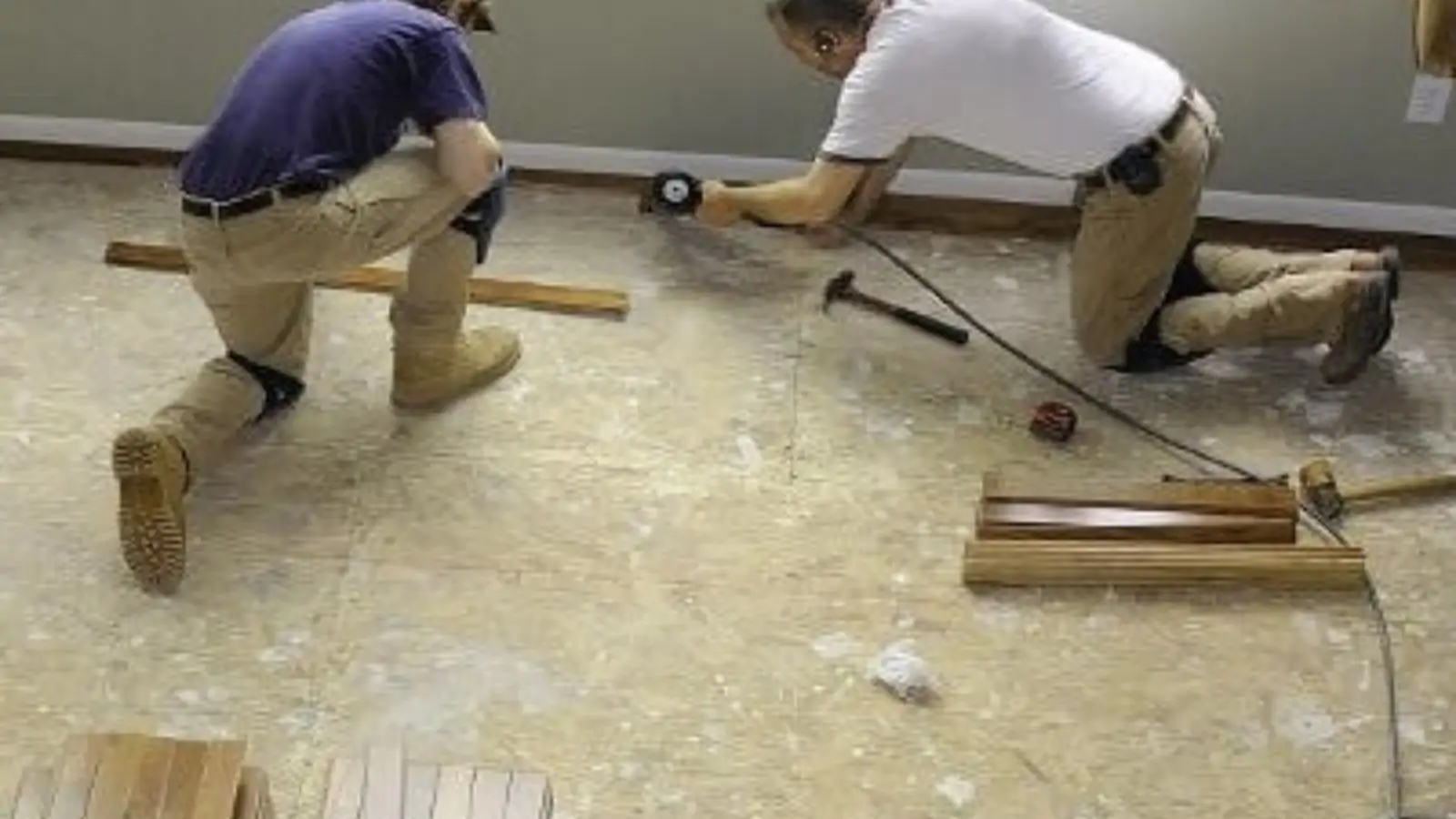
Water damage repair is the rebuilding stage. Once water has been removed and the structure is dry, damaged drywall, insulation, flooring, trim and paint have to be replaced or restored so the room works again. In American Fork this work usually follows a burst pipe, an appliance leak, a roof leak or a flooded basement.
It starts with a written scope. The crew marks what is salvageable, what has to come out and what the finished room needs, so the price is explained before any material is ordered.
Repair or replace: how the decision gets made
Not every wet material is lost. Hard surfaces such as concrete, tile and framing lumber often dry in place, while porous materials soak up water and may not recover. The table shows how crews usually sort them.
| Material | Usually dries in place | Usually replaced |
|---|---|---|
| Drywall | Light dampness, caught early | Sagging, stained through or wet for days |
| Insulation | Rarely | Most batt and blown insulation that got wet |
| Carpet pad | Almost never | Nearly always |
| Hardwood | Mild cupping that settles | Buckled, split or moldy boards |
| Framing lumber | Almost always | Rot or structural softening |
| Cabinets | Solid wood bases that dry | Particleboard that swells |
Ceiling and wall water damage repair
A ceiling that drips, bows or shows a brown ring is telling you water is still above it or has been recently. Callers describe attic ceilings that began dripping, bathroom ceilings with stains and a wall corner where the ceiling meets the shower, and each of those starts with finding the source before any repair.
Once the source is stopped, the crew cuts back to dry, sound drywall, checks the insulation above it and lets the cavity dry. New drywall is hung, taped and textured to match, then primed with a stain-blocking primer before paint. A wall with a hole forming is replaced in sections, not patched, because soft drywall keeps crumbling at the edges.
Signs the damage is larger than the stain
- The drywall feels soft or crumbles when pressed
- The paint blisters, peels or has a ring that keeps growing
- A musty smell stays after the surface dries
- Baseboards or trim have pulled away from the wall
- The ceiling sags or has a visible bulge
Hardwood floor cupping and damp subfloors
Cupping happens when boards absorb moisture from below and the edges rise above the center. Walnut, oak and other hardwood floors can cup after a slow leak or after a basement ceiling wets the floor above. Sometimes the boards flatten as they dry, and sometimes they have to be sanded or replaced. The crew checks the subfloor with a moisture meter before deciding.
Need a repair scope in writing?
Call dispatch and a crew will explain what the repair involves before any work starts.
Older homes: check for asbestos and lead before demolition
Opening walls and lifting floors in an older house can disturb materials that were common decades ago. The Utah Department of Environmental Quality says asbestos-containing materials are still found in many older homes, including vinyl tile and sheet rock, and that you cannot tell by looking. Ask the contractor how suspect materials are tested before demolition.
The EPA adds that contractors working in homes built before 1978 need to use lead-safe work practices on emergency renovations. American Fork's historic downtown has buildings from the late 1800s and early 1900s on the city's walking tour, so owners of older houses in that part of town should raise both questions early.
What drives the cost of repair
No fixed price applies to every repair, and we do not post one. The number depends on a short list of factors that the crew works through with you.
| Factor | What it changes |
|---|---|
| Water category | Contaminated water means more material is removed |
| Affected area | Square footage drives labor and material |
| Materials | Hardwood and custom cabinets cost more than standard drywall |
| Drying days | Longer drying delays the start of repairs |
| Finish level | Texture, paint and trim must match what was there |
Insurance may cover repairs when the water was sudden and accidental, and the Utah Insurance Department notes that policies often exclude damage from drains, sewers and flooding. Keep your photos and receipts, and ask your insurer before permanent repairs begin, since the department advises waiting until the insurer has inspected the property.
Want a number for your own house? Call (385) 988-9410 and a crew will explain the scope and the price before work starts.
How repair connects to the rest of the job
Repair is the last step in a sequence. If your carpet is still soaked, water mitigation has to come first, and if debris or contaminated materials are present, water damage cleanup clears them. Customers in Pleasant Grove and the rest of the area follow the same order.
Stay safe before repairs start
- Turn off power to wet areas at the breaker only if you can reach the panel without standing in water
- Stay out of rooms with sagging ceilings and standing water that touches outlets
- Do not use a household vacuum on water, and keep children and pets away from the wet area
- Wear gloves and boots if water may be contaminated, and wash your hands afterward
- Take photos before moving anything, since your insurer will ask for them
Questions about water damage repair
Repairs start after the structure reads dry. Closing a wall over wet framing traps moisture, so the crew checks readings with a moisture meter before any drywall goes back up. Drying usually takes several days, and slow materials such as hardwood and dense insulation can take longer.
Not safely. A stain means water reached the material, and paint over wet or weakened drywall hides the problem without fixing it. The crew finds the source, checks whether the drywall is still sound and replaces what has lost its strength before anything is finished.
It depends on the work. The city's Building Department enforces the building code and inspects construction, but its public page does not list which repairs need a permit. Ask the Building Department before work starts, especially if the repair touches plumbing, electrical or structural framing.
The repair stops and the area is handled as mold work first. Our mold remediation process contains the area, removes the affected material and only then returns to rebuilding. Starting repairs over active mold spreads it.
Often when the water was sudden and accidental, and often not when the damage came from a slow leak or a maintenance problem. Read your policy or ask your insurer. We provide a written scope and photos, but we do not decide coverage.
We repair the interior damage that the roof leak caused, including the ceiling, insulation and walls below it. The roof itself belongs to a roofer, and fixing it first matters because new water undoes interior work.
Water still spreading or a question this page did not cover? Call (385) 988-9410