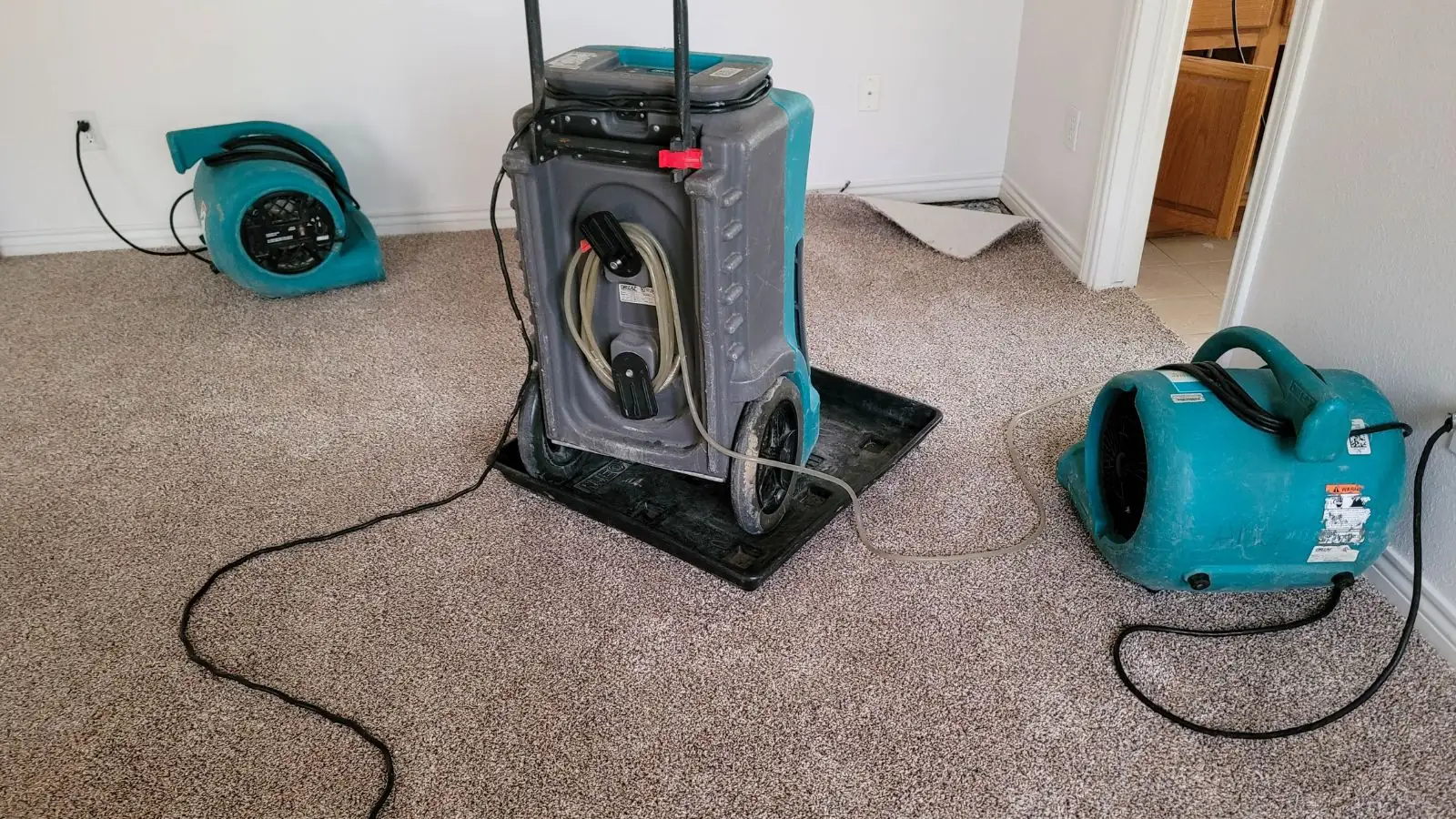
A water loss moves through stages, and each stage has its own work. The pages below follow that order, from stopping the water to rebuilding the room. If you are not sure where your situation sits, call (385) 988-9410 and dispatch will help you sort it out.
The first day: stopping and removing
Emergency water removal is the answer to water standing on a floor, in a basement or in a crawl space, and emergency water mitigation is the drying that has to follow in the first 24 to 72 hours. Both are dispatched around the clock.
The first week: clearing what cannot be saved
Water damage cleanup removes soaked debris and materials that cannot be dried, and it is also where sanitizing happens when the water was contaminated. When the source was a river rise, a storm or a sewer line, flood damage restoration adds the safety steps those causes demand.
After drying: rebuilding
Water damage repair covers drywall, ceilings, flooring, insulation and paint. It is scoped separately so you can see the price of rebuilding apart from the price of the emergency work.
When moisture lingers: mold
Mold remediation is the secondary service. It follows water damage that stayed wet, and it starts with the moisture source because mold needs water to grow.
What is not on this list
We do not handle fire and smoke damage, waterproofing or foundation work, roofing or plumbing repair. When your problem needs one of those trades, we say so and point you in that direction.
Where each service is available
Every service above is dispatched from American Fork, ZIP 84003, to the neighboring towns of Pleasant Grove, Lehi, Lindon and Alpine. The service area page shows the map.
How pricing works
We explain the scope and the price before work starts, and we do not post exact figures online. Water category, affected area, materials, drying days and rebuild scope decide the number, and each service page lists the factors that matter for that work.
How the services connect on a typical job
| Stage | Service | What happens |
|---|---|---|
| Hour one | Emergency water removal | Standing water is pumped and extracted |
| Day one to three | Water mitigation | Fans and dehumidifiers dry the structure while meters track progress |
| Day two to five | Water damage cleanup | Soaked materials that cannot be dried are removed and surfaces are cleaned |
| After readings are dry | Water damage repair | Drywall, insulation, flooring and paint are replaced |
| If moisture lingered | Mold remediation | The source is fixed, then affected materials are cleaned or removed |
Not every job uses every stage. A small appliance leak caught within hours may need only mitigation and a patch, while a basement flood can use all five. The crew writes the scope for your house and explains it before work starts.
Why the order matters
The EPA recommends drying water-damaged areas within 24 to 48 hours to prevent mold growth, so the early stages are where time counts. Repair comes last because covering a wet wall traps moisture. Each service page explains its stage in detail and links to the next one.
The ANSI/IICRC S500 standard for water damage restoration and the S520 standard for mold remediation are the published benchmarks for this work. You can ask any company whether its crews follow them.
Choosing the right page to start with
Match your situation to a service
- Water is standing or still flowing: emergency water removal
- Water stopped but walls and floors are wet: water mitigation
- Soaked carpet, drywall or belongings need to come out: water damage cleanup
- River rise, storm runoff or sewer backup: flood damage restoration
- Everything is dry and needs rebuilding: water damage repair
- Musty smell or visible growth: mold remediation
Ready to start?
Call the 24/7 line and describe what happened.