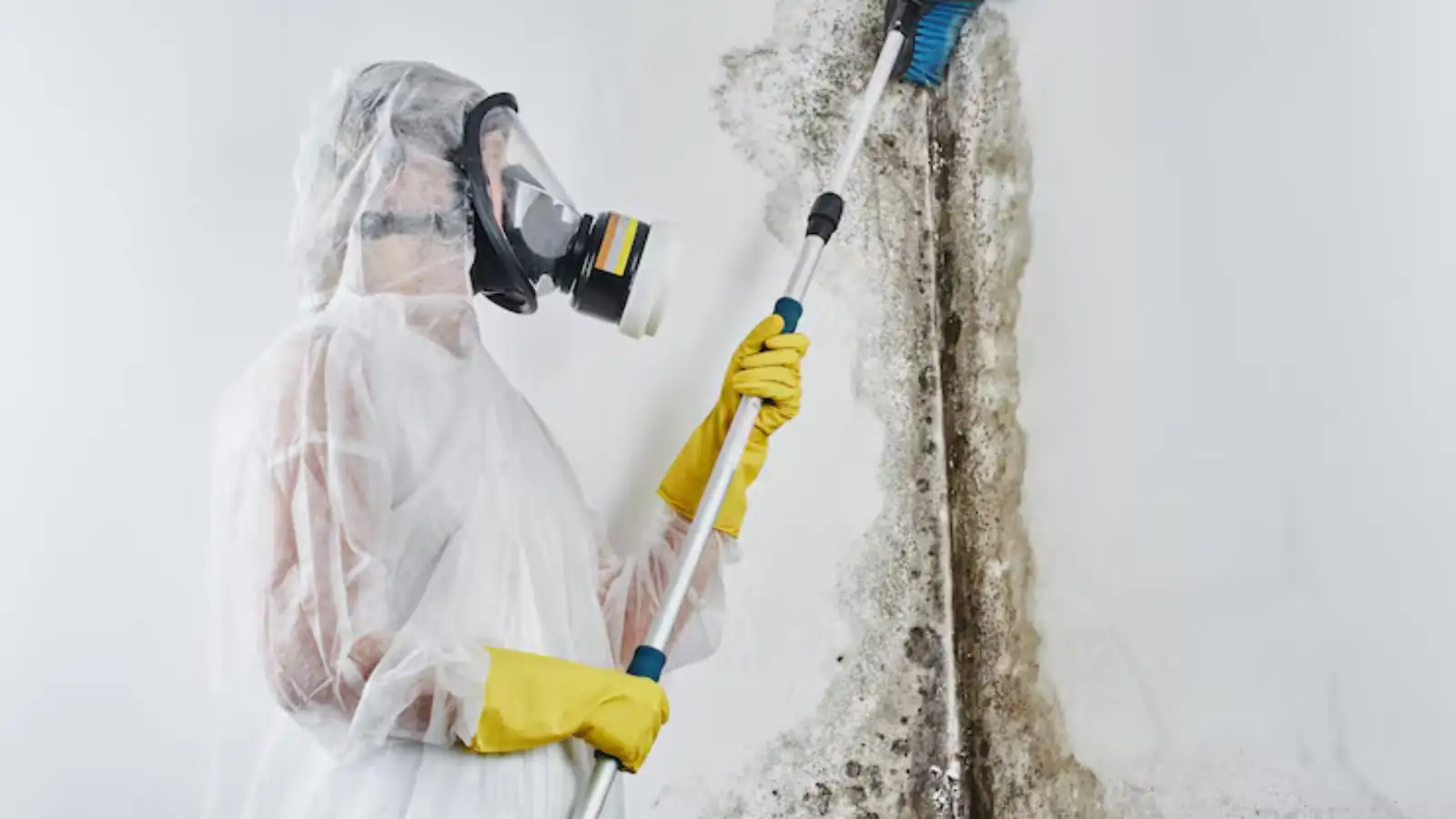
Mold remediation is the removal of mold growth and the work that stops it from starting again. In American Fork the usual setup is a leak that went unnoticed for long enough that drywall, carpet or insulation stayed wet, and mold followed. The industry procedure is the ANSI/IICRC S520 standard, now in its fourth edition (2024), and you can ask any company whether its crews work to it.
Our mold work is the secondary service on this site, behind water damage, but it is where many calls land. We start with the source, because removing mold without stopping moisture just resets the clock.
Dark spots, a musty closet or a ceiling stain with fuzzy edges: that is a mold question
People rarely begin with the word remediation. They notice a few spots in a closet corner, a smell under the basement stairs, a ceiling edge in the shower that looks dark or a closet where a leak occurred. Each of those is a moisture problem first and a mold problem second, and the first job is to find where the water is coming from.
Mold after water damage
Mold grows on wet organic material. Drywall paper, carpet pad, wood and insulation backing all feed it, which is why a flood or leak that was not dried quickly so often ends in mold. A toilet that leaked from an upstairs bath into a finished basement ceiling, a bathroom sink leak that soaked the cabinet or a wet spot in a child's closet are all real examples that homeowners describe.
If the water damage is recent, water mitigation may be enough to prevent mold. If it has been wet for days or weeks, the materials are assessed for removal.
Mold removal and black mold cleanup
Removal follows containment. The crew isolates the work area with plastic barriers and negative air where needed, removes affected porous materials in sealed bags, cleans hard surfaces with detergent and water and dries everything completely. The EPA says absorbent or porous materials such as ceiling tiles and carpet may have to be thrown away if they become moldy.
Black mold is a color, not a different job. The same process applies to any visible mold, and the question to ask is how big the area is and whether moisture is still present. The EPA says homeowners can often clean areas smaller than about 10 square feet themselves, and larger areas call for a professional.
Seeing mold or smelling it?
Describe where it is and where the water came from. Dispatch will tell you what a crew would do.
Mold testing, inspection and clearance
Many callers ask about testing, a mold assessment contractor or a quote for removal and testing together. Testing identifies and measures, it does not remove. The EPA says sampling is generally unnecessary when mold is visible, but it can be useful when you smell mold and cannot find it, or when a lender or buyer wants documentation.
| Step | Who does it | What it does |
|---|---|---|
| Inspection or assessment | A mold assessor or the restoration crew | Finds moisture sources and decides what the area needs |
| Remediation | The restoration crew | Contains, removes and dries |
| Clearance testing | An independent assessor | Verifies the area is clean when a lender or buyer needs it |
Independent clearance matters because the person who removed the mold should not be the one to grade the work. Ask the assessor to explain what the results mean and what they do not.
What decides the price
Mold remediation cost factors
- Square footage and the number of rooms
- What the mold is growing on, since porous materials come out
- Access, such as crawl spaces, attics and finished basements
- Whether the moisture source has been fixed
- Testing or clearance, which is separate from removal
Scope and price are explained before work starts. We do not post numbers because the area and materials decide them. Ask your insurer whether the mold followed a covered event, and keep photos and receipts.
The local side: American Fork homes and moisture
Utah County sees a wet spring in high-snowpack years, and the city's river channel page says runoff peaks from April through June 1. Basement walls that pick up moisture then can stay damp into summer. Condensation from air-conditioning lines is also a regular source. Winter freezing adds another route. A cracked irrigation or supply line can wet a wall for months before anyone finds it, and mold is often the first sign.
Health questions about mold belong with your physician. We handle the building side.
How mold work fits with the rest
Mold usually means water damage came first, so read about water damage cleanup if debris and ruined materials are present, and water damage repair for the rebuild after the area is clear. Homeowners in Pleasant Grove and Lehi call about the same patterns.
Questions about mold remediation
The EPA says that in most cases, if visible mold growth is present, sampling is unnecessary. Dark or fuzzy spots, a musty smell and a nearby leak are the usual signs. If you want certainty, a mold assessment contractor can test, and the inspection is a good moment to ask what the plan would be.
Soon, and never wait for a smell to get stronger. Mold needs moisture, and the EPA says water-damaged areas should be dried within 24 to 48 hours to prevent growth. A closet corner that has been damp for weeks is already past that window.
Callers sometimes tell us a lender will not fund a purchase until mold is removed. We remove mold to the standard described below, and independent clearance testing is done by a separate assessor so the results are neutral. We cannot promise what a lender or buyer will accept.
Ask whether your state licenses mold work, and ask any company for proof of licensing and insurance before you hire it. We explain the scope and price before work starts, so you can compare.
That depends on the size of the area and where it is. For small contained areas, usually not. Dispatch and the crew will explain, and health questions about exposure belong with your physician.
Mold returns when moisture returns. Remediation removes the growth, and fixing the leak, humidity or condensation problem is what keeps it from coming back. We never promise it will not return, because the house, not the crew, controls the moisture.
That is a very common source. A backed-up condensation line wets the ceiling or closet near the air handler, mold follows and the line has to be cleared or repaired as part of the fix.
Water still spreading or a question this page did not cover? Call (385) 988-9410